Tuesday, November 26, 2013

A Pittsburgh nursery rhyme

I wrote this Pittsburgh-themed nursery rhyme for Pittsburghers young and old.  Nursery rhymes are helpful for the pediatric population because they promote early literacy. 


10 little panthers escaped from Pittsburgh Zoo,
Went into the city, to them it was all new.
They ran up and down the streets and the mayor said,
“All you panthers, go back to bed!”

9 little panthers, roaming in the dark,
Went to play baseball, at PNC Park.
They tossed the ball ‘til the umpire yelled,
“Get off the field, or you’ll all be expelled!”

8 little panthers, took the Duquesne Incline,
Going to Mt. Washington, to check out the skyline.
They pushed and they shoved while trying to see,
The conductor “tsk-ed tsk-ed” and said “Woe is me!”

7 little panthers, went to shop on Walnut Street,
Thought they’d buy shoes, to wear upon their feet.
Their paws were all sticky, their claws were a mess,
The manager cried, “I’m in such distress!”

6 little panthers started across Smithfield Bridge,
They decided to be daredevils and walked along the ledge.
Wanting to show off, they all took a dive,
The policeman shouted, “You’re lucky to be alive!”

5 little panthers strode into the Carnegie Museum,
They heard that there were paintings, and wanted to go see ‘em.
But the panthers got tired, they slept and they snored,
The curator nudged them, but him they ignored.

4 little panthers went to the Benedum Center,
They paid their admission and were permitted to enter.
They sang and they danced, they swung from chandeliers,
Called the opera singer, “Let’s give them three cheers!”

3 little panthers, walked over to the O,
They wanted a snack they could eat on the go.
Gobbling hot dogs and French fries and pizzas and more,
The cook screamed, “Get out, or I’ll show you the door!”

Two little panthers found a classroom at Pitt,
They wanted to learn, so they stayed just a bit.
They studied, took notes, gave the professor a look,
He joked, “You’re so smart, get out your checkbook!”

One little panther, alone on the bus,
Missing his siblings, he started to fuss.
He bought a transfer, got onto the T,
He went back home, to his family.

His brothers and sisters, his parents, too,
Welcomed him home, back at the zoo.
The zookeeper smiled, then shook his head,
“All you panthers, go back to bed!”


/m/ in the initial position

Practice /m/ with these words:

"milk"


"meat."


To practice /m/ in phrases, have your child list the different types of milk: "chocolate milk, skim milk" for beginners; "soy milk, almond milk" for milk connoisseurs.

To practice /m/ in sentences, ask you child what kinds of milkshakes she would like to drink.  Targets may include, "I like strawberry milkshakes," or "I like peanut butter milkshakes." 

To practice /m/ in conversation, ask your child what meats you should buy for dinner for the upcoming week.  Targets may include, "Buy chopped meat.  You should make tacos.  I like mine with beans."

A quick tip for making the /m/ sound is to cue your child to make the "Mmmm" sound, like she is eating something she really enjoys.  Show your child how to make the /m/ sound, and have her pay attention to the fact that your lips stay closed while making the sound.  If these cues don't do the trick, there are touch cues.  One is to have her say "Mmmm" while putting her finger under her nose to feel the air coming out.  Another is to have her gently pinch her nose to feel the vibration in the nose area while saying "Mmmm."  You may provide an additional touch cue by gently pressing her lips together.

Tip: Have a snack at the store, and say "Mmmm" after every bite.

What are some good on-the-go snacks at Giant Eagle perfect for the /m/ sound?  Post below!

/v/ in the initial position

Practice /v/ with these words:

"vegetables,"


and "vinegar."


To practice /v/ in phrases, ask your child what colors of vegetables she sees.  Targets may include, "green vegetables," yellow vegetables" and "red vegetables."  To increase attention, see if you can find oddly colored vegetables, like purple (cabbage, broccoflower) or white (asparagus, cauliflower).

To practice /v/ in sentences, ask your child what vegetables she would and would not put in a salad.  Targets may include, "I would put in green vegetables" or "The vegetable I would not put in would be spinach!"

To practice /v/ in conversation, ask your child to compare and contrast vegetables and fruits.  You may hear some interesting answers!  Here is a link from the Mayo Clinic describing the difference between fruits and vegetables: http://www.mayoclinic.com/health/fruit-vegetable-difference/MY02201

Visual cues are helpful when making the /v/ sound.  Instruct your child to put her top teeth on her bottom lip, and blow.  Show her how to do it while you make the /v/ sound.  Touch cues are also helpful  You can gently push on her lower lip until it is under her top teeth.  Also, have her put her hand in front of her mouth when she makes the /v/ sound so that she can feel the air coming out.  A popular visual cue to remind your child how to make the sound is, "Bite and blow."

What other /v/ initial words can you think of at Giant Eagle?  Post below!  These were the only ones I had come up with as of press time.  I suppose others would include V8, veal and vanilla.  Of course, I'm not sure how many of these would be in a child's vocabulary!

/p/ in the initial position

Practice /p/ with these words:

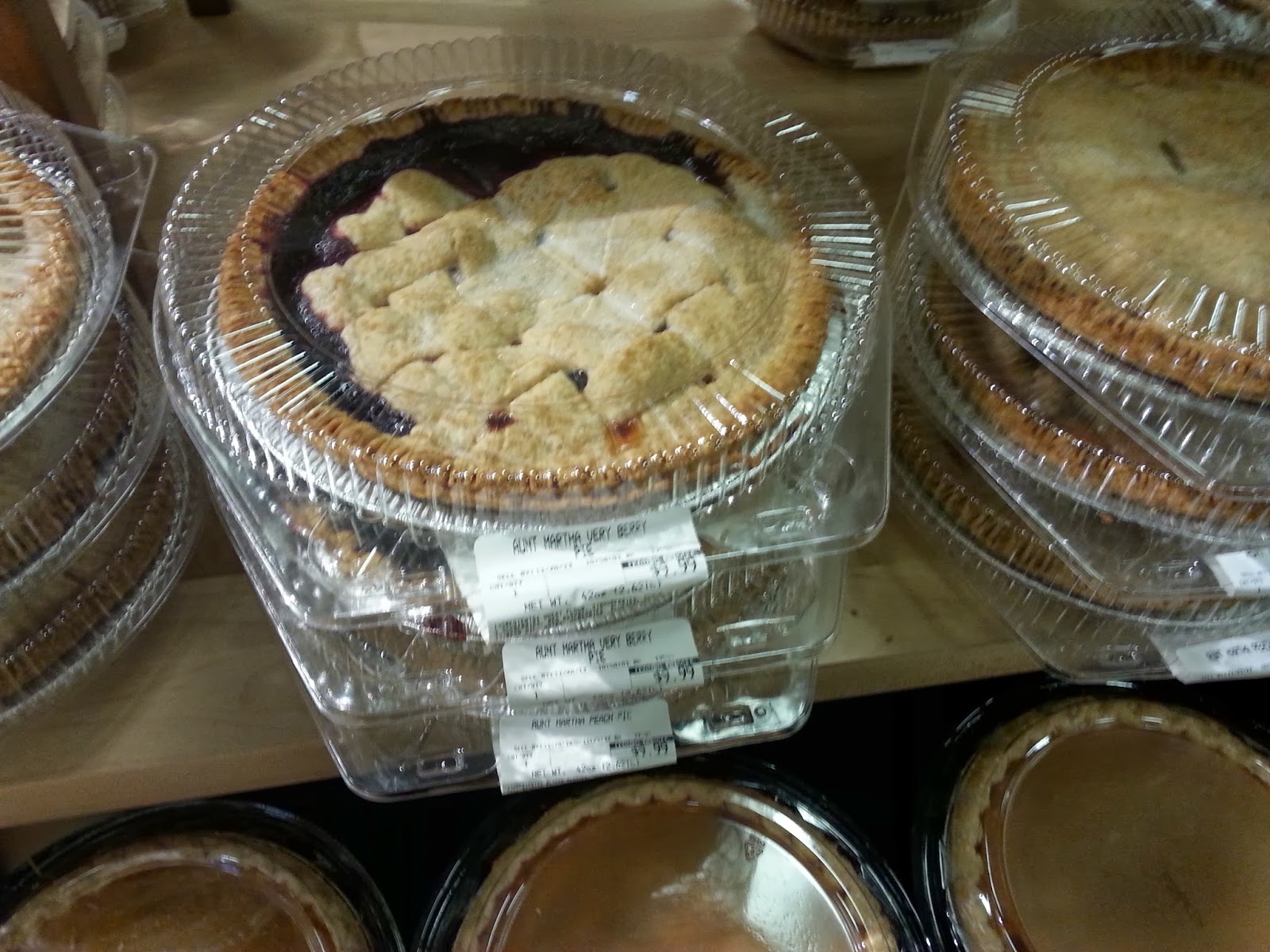
 "pie,"
"pizza," and ...


"pudding."


To practice phrases, ask your child to list the varieties of pie ("peach pie, pumpkin pie, pecan pie"), pizza ("cheese pizza," "pepperoni pizza," "thin crust pizza) and pudding ("pistachio pudding, vanilla pudding, chocolate pudding").

To practice sentences, it can be fun to have your child think of sentences with as many "p words" as possible.  This gives extra practice, and helps build awareness of sounds.  Targets may include, "I ate pasta and pizza with pink pudding for dessert," or "I made a pickle pie!"

To practice conversation, ask your child to describe the perfect pizza.  Targets may include, "The perfect pizza is from Mineo's.  I like the pizza with extra cheese.  I like to drink pop with it."  To keep the conversation going, try asking your child what toppings she would never eat on a pizza (anchovies?  pineapple?), or what she likes to eat for dessert after pizza.

To make the /p/ sound, cue your child to "pop" her lips.  Have her pay special attention to the "puh" sound, and feel the air coming out of her mouth.

Tip: You may start many of these activities in the grocery store, and then continue them in the car ride home for extra practice.

Monday, November 25, 2013

/k/ in the initial position

Practice the /k/ sound with these words:

"candy,"...


"cake" or "counter" and...


"cookies."

 
To practice the /k/ sound at the phrase level, ask your child to label the cookies.  Targets may include, "chocolate chip cookies," "graham cracker cookies," and "oatmeal cookies."

To practice the /k/ sound at the sentence level, ask your child which cake looks the prettiest.  Targets may include, "The wedding cake looks the prettiest," or "I like the chocolate cake."  

To stimulate conversation, ask your child why she chose a particular cake as her favorite.  Targets may include, "The chocolate cake is my favorite because it is yummy.  I like mine with chocolate frosting.  I had chocolate cake with chocolate frosting at school.  It was delicious.  Kate likes vanilla..."

Cueing for the /k/ sound is similar to cueing for the /g/ sound as they are made in the same place in the mouth.  There are plenty of creative tips for making the /k/ sound from using a Q-tip to touch where the tongue should meet the soft palate to eating peanut butter to increase awareness of tongue movements.  These ideas may not be practical in a grocery store setting, though.  

One way to instruct for the /k/ sound is to talk to your child about the movement the tongue needs to make.  The tongue should move backwards in the mouth, and meet the back of the throat (the tongue is really making contact with the soft palate, or "velum," but the back of the throat is easier for a child to understand).  

Another way to instruct is using a touch cue.  Have your child feel your throat and jaw area when you make the /k/ sound to help conceptualize the movement.  Then, have her feel her own throat/jaw area while practicing the sound.  The difference between making the /g/ and /k/ sound is that when we make a /g/, the vocal cords vibrate whereas with /k/ the vocal folds don't vibrate.  Being attuned to the difference between /k/ and /g/ is one way to target phonological processes such as voicing and devoicing. These will be discussed in subsequent postings.

Tip: To stimulate conversation, it can be important that you don't ask all the questions, or else the activity can feel like a quiz.  You may take turns asking the questions, and this can also target the /k/ sound.  Your child may ask you what your favorite cake is, or what your wedding cake looked like.